
Fleet & Business
Golf Cart Fleet Warranties: What Golf Courses Should Compare
A golf cart fleet warranty can reduce after-sales risk, but only when the golf course understands exactly which vehicles, batteries, components, labor…
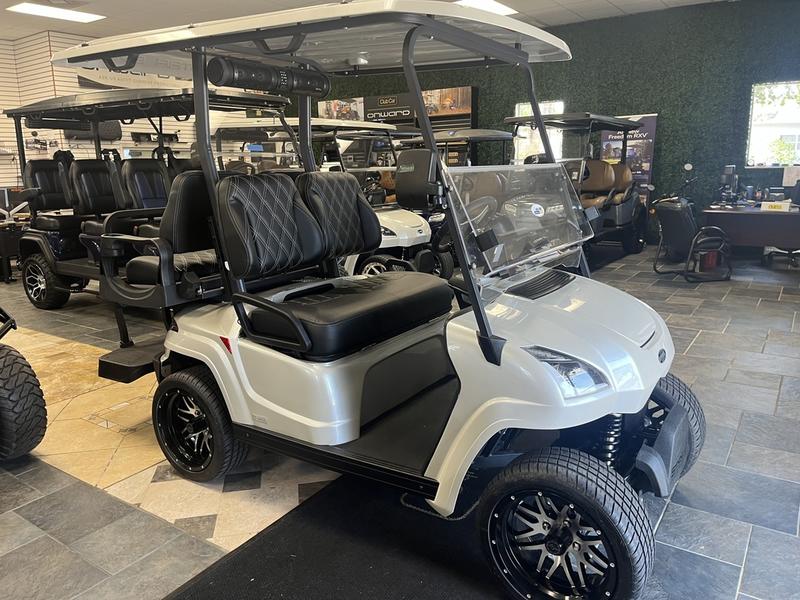
Planning golf cart fleets for multiple golf courses requires a different process from replacing vehicles at one property. Corporate teams must combine local operating requirements with centralized purchasing, standard specifications, capital schedules and consistent reporting.
One course may be flat and high volume. Another may be hilly, resort-oriented or dependent on gas vehicles. A third may need passenger shuttles and heavy utility carts that do not belong in the primary golfer fleet.
Complete standardization can therefore be as inefficient as no standardization. The stronger approach creates approved vehicle families, common commercial terms and controlled exceptions supported by site data.
This guide explains how golf management companies and portfolio owners can assess each location, consolidate demand and coordinate multi-location purchasing without weakening local operations.
Plan golf cart fleets for multiple golf courses through a portfolio-wide specification with property-level schedules.
Standardize the areas that create purchasing and operating value: primary model families, controls, chargers, colors, accessories, reporting fields and contract terms. Allow documented exceptions for terrain, climate, power availability, business model and specialized work.
Combine replacement dates into a multiyear acquisition plan rather than waiting for each course to initiate a separate emergency purchase. Evaluate suppliers on completed fleet cost, regional support, technology, delivery coordination and contract administration.
The best result is not one identical cart everywhere. It is a controlled fleet architecture that makes local operations easier and corporate oversight more reliable.
A single-course buyer can focus on one route, one cart barn and one management team. A portfolio operator must compare properties with different:
Fleet inventories also tend to accumulate specialized, lightly used or outdated vehicles over time. U.S. Department of Energy fleet-rightsizing guidance recommends evaluating vehicle mission, duty cycle, utilization, downtime and whether each vehicle remains the correct type and size for its work. Although written for broader vehicle fleets, the same planning framework is useful for golf-course portfolios.
A regional operator should therefore create one common data structure before requesting bids. Without consistent data, corporate procurement may compare inaccurate quantities and incompatible specifications.
Begin with every vehicle at every location.
Record:
Include golfer carts, reserves, marshal vehicles, passenger shuttles, beverage carts and grounds-maintenance equipment.
Do not rely only on accounting records. A vehicle listed as active may be awaiting parts, used only during tournaments or permanently reassigned to another department.
Every cart should have an operating purpose.
Examples include:
This prevents a four-passenger cart used mainly by one manager from being treated as equal to a six-passenger shuttle operating a scheduled route.
Size each property independently before combining the order.
For golfer carts, use:
Required golfer fleet = peak simultaneous riding groups + turnaround overlap + usable reserve capacity
For specialized vehicles, count simultaneous assignments rather than total staff.
After validating each location, consolidate quantities by model family, powertrain and delivery window. Centralized purchasing should aggregate real needs—not multiply a standard quantity by the number of courses.
Standardization can simplify:
It can also strengthen volume negotiations by concentrating purchases into fewer approved configurations.
A historical example is Club Car’s delivery of 171 Tempo vehicles across ten courses operated by Burhill Group. The vehicles were distributed across the portfolio as part of an established supplier relationship, illustrating how a multi-course operator can coordinate a large fleet program across separate properties.
Before approving golf cart fleets for multiple golf courses, define when a property may depart from the corporate standard.
Reasonable exceptions may include:
Require the requesting property to document the operational reason, complete cost and effect on parts, training and support.
An exception should solve a measurable problem rather than reflect only a local brand preference.
Corporate bid sheets should compare equivalent working vehicles.
Include:
A portfolio may appear to receive one standard price while different properties later add essential equipment separately. Require all operating accessories to appear in the centralized pricing schedule.
A regional supplier should explain how it will support every delivery location.
Review:
Do not assume a supplier’s strong presence near headquarters means equal support across the portfolio.
Separate emergency replacements from planned capital cycles.
Create a rolling schedule showing:
Grouping several locations may improve purchasing efficiency, but forcing a healthy fleet into early replacement can destroy value.
Use phased purchasing when vehicle condition, budgets or infrastructure differ substantially.
Central procurement and local operations need clearly divided responsibilities.
Define who approves for golf cart fleets for multiple golf courses:
Local managers should contribute operational data, while corporate procurement controls commercial terms and contract compliance.
A portfolio golf cart fleets for multiple golf courses architecture organizes vehicles into approved roles.
| Fleet tier | Typical role | Standardization priority |
|---|---|---|
| Primary golfer cart | Daily two-passenger transportation | Very high |
| Premium golfer cart | Resort, member or VIP assignments | Moderate |
| Marshal and staff cart | Golf operations | High |
| Light utility cart | Irrigation and daily grounds work | High |
| Heavy utility vehicle | Materials and large maintenance tasks | Moderate |
| Passenger shuttle | Parking, lodging and events | Moderate |
| Beverage vehicle | Mobile food-and-beverage service | Role-specific |
| Accessible vehicle | Adaptive play and mobility | User- and property-specific |
The primary golfer fleet normally offers the greatest opportunity for common models, controls and accessories.
Use the two-passenger golf-course fleet guide to define the core rental-cart specification.
The utility-cart buyer’s guide and passenger shuttle guide can support separate work and transportation standards.
A useful fleet policy has three levels.
These apply unless senior approval is granted:
These create most of the standardization benefit:
These reflect local operations:
This structure keeps local exceptions visible without allowing uncontrolled model proliferation.
The following current platforms can help shape golf cart fleets for multiple golf courses. Final models, availability and configurations must be confirmed in the commercial proposal.
| Vehicle family | Portfolio role | Current options | Main issue to control |
|---|---|---|---|
| Club Car Tempo | Primary golfer fleet | Flooded lead-acid or lithium | Exact package and technology modules |
| E-Z-GO RXV | Primary golfer fleet | Gas or ELiTE lithium | Powertrain and infrastructure variation |
| Cushman Hauler XL | Heavy utility work | Gas or ELiTE lithium | Route, load and turf restrictions |
The Club Car Tempo is a purpose-built fleet platform currently offered with flooded lead-acid or lithium power. Club Car also provides an updated dashboard, supported braking options and compatibility with its connected golf technology.
Tempo may support a standardized golfer fleet where properties want:
The proposal should identify exact chargers, batteries, braking, bag equipment and technology at each location.
The E-Z-GO RXV is a purpose-built golf fleet option available in current gas and ELiTE lithium configurations.
Its model family can suit operators that need gas at selected properties and lithium at others while retaining a more consistent vehicle platform. E-Z-GO also offers Pace Technology for supported connected fleets.
The operator should still document powertrain-specific braking, chargers, maintenance and local service.
The Cushman Hauler XL is available with gas or ELiTE lithium power. Cushman currently lists a long aluminum cargo platform, a 1,200-pound bed rating and a 1,600-pound total vehicle load rating.
It may support:
Its capacity does not make it suitable for every course route. Loaded weight, tire selection, weather, turf condition and superintendent policy must control access.
Portfolio buyers can compare Club Car golf carts, E-Z-GO fleet vehicles and Cushman utility vehicles within one standardized request.
A centralized contract for golf cart fleets for multiple golf courses should contain a master agreement and property schedules.
The master agreement can establish:
Each property schedule should state:
Include pricing for approved options so local managers cannot create unbudgeted configurations through informal additions.
Where replacement dates span several years, define how model changes, discontinued equipment and successor vehicles will be handled.
Multi-location delivery should be treated as an implementation project.
Create a schedule for:
Avoid delivering every fleet on the same date when the operator lacks enough employees to inspect, commission and train each property properly.
Acceptance records should capture vehicle numbers, condition, accessories, keys, chargers, manuals and open corrections.
Connected technology and common reporting can help operators compare properties, but the information must use consistent definitions.
Track:
Use the golf cart GPS fleet-management guide when evaluating connected platforms and reporting responsibilities.
Replacement decisions should use both local conditions and portfolio benchmarks. A fleet with above-average repair costs may still be retained when utilization is low and availability remains acceptable. Another may require early replacement because downtime affects substantial rental demand.
The financial model for golf cart fleets for multiple golf courses should show corporate totals and property-level results.
Include:
Use the golf cart fleet total cost of ownership framework.
Useful portfolio metrics include:
Cost per available cart = total annual fleet cost ÷ average service-ready carts
Cost per riding round = applicable golfer-fleet cost ÷ riding rounds served
Downtime rate = out-of-service vehicle days ÷ total scheduled vehicle days
Do not hide poor property performance inside a portfolio average. Report total cost while retaining location, vehicle class and powertrain detail.
Common mistakes include:
Standardization should reduce complexity without preventing a course from receiving the vehicle required for its work.
Golf Carts Nation can prepare proposals for golf cart fleets for multiple golf courses with centralized purchasing and property-level configurations.
The review can include:
Operators can combine standard fleet models with specialized vehicles rather than issuing disconnected requests to several suppliers.
Fleet orders get volume pricing (10% off from 4 carts, 15% off from 8) and coordinated delivery across the U.S. or export.
Effective golf cart fleets for multiple golf courses balance centralized control with property-specific operating needs.
Begin with one inventory and data structure. Define approved vehicle roles, common specifications and permitted exceptions. Then consolidate validated quantities into a master contract with individual property schedules.
Compare complete configurations, regional service, infrastructure, technology, delivery and total ownership cost. Replace fleets according to condition and business need rather than forcing every location onto the same calendar.
The result should give corporate procurement stronger commercial control while allowing local managers to operate vehicles that fit their terrain, golfers and departments.
Request a multi-course portfolio fleet proposal based on your locations, current inventories, replacement schedule and required vehicle classes.
Golf cart fleets for multiple golf courses are coordinated vehicle programs covering two or more properties under common purchasing, specification, reporting or service standards. The fleet may include primary golfer carts, utility vehicles, passenger shuttles, beverage carts and specialized staff equipment.
Not necessarily. A common primary platform can simplify parts, training and purchasing, but terrain, climate, infrastructure and business model may justify exceptions. Use an approved standard with a documented process for property-specific alternatives.
First calculate the requirement at each course using peak demand, role assignments and reserve capacity. Then combine validated quantities by vehicle family, powertrain, configuration and delivery period. Do not multiply one standard fleet size across every location.
Include approved models, pricing, options, service standards, warranty administration, parts, technology, payment terms and change procedures. Add separate schedules for each property’s quantities, accessories, delivery dates, chargers, training and acceptance requirements.
Yes. One property may support lithium charging while another needs gas for extended or irregular operation. The operator should quantify the local reason and account for the additional parts, training, energy and support complexity.
Ask suppliers to identify service locations, technicians, mobile capabilities, parts stocking and escalation contacts for every property. Review how warranty claims, scheduled maintenance and urgent failures will be handled across the complete operating territory.
Not automatically. Consolidated replacement can improve purchasing efficiency, but replacing healthy vehicles early can waste value. Use condition, availability, contract dates, repair cost and business needs to create sensible replacement phases.
Yes. A portfolio proposal can include golf cart fleets for multiple golf courses alongside utility, passenger, beverage and staff vehicles. Each class should retain separate specifications, quantities, powertrains and property assignments.
Request a multi-course portfolio fleet proposal based on your properties, existing vehicles, replacement phases, standardized configurations and multi-location delivery requirements.
Keep reading
A golf cart fleet warranty can reduce after-sales risk, but only when the golf course understands exactly which vehicles, batteries, components, labor…
A Club Car vs E-Z-GO golf course fleet decision usually comes down to far more than brand preference. Both manufacturers offer established…
Choosing the best golf cart brands for golf courses requires more than comparing logos, colors or one advertised specification. A course fleet…
Questions about this article?
Tell us what you need and where it's going. We'll reply with the best matches and a delivered price.