Brands & Model Reviews
Club Car vs E-Z-GO for Homeowners: Which Golf Cart Should You Buy?
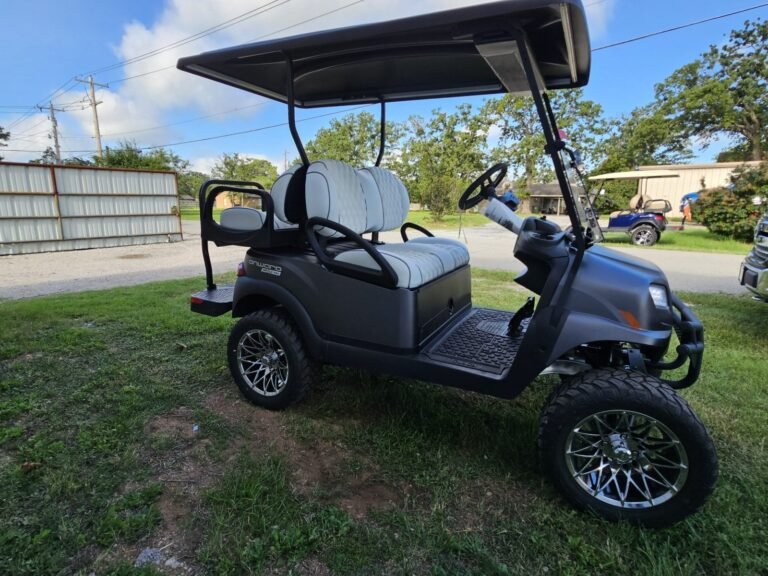
Club Car or E-Z-GO for your home? How the two Georgia brands compare on models, seating, lithium power, lifted options, live prices and warranty.
Choosing the best golf cart brands for golf courses requires more than comparing logos, colors or one advertised specification. A course fleet must withstand repeated golfer assignments, terrain, weather, charging or fueling, tournaments and years of commercial use.
Owners and procurement managers must also evaluate the organization supplying the vehicles. A capable cart can still become an operating problem when parts, warranty administration or local service are difficult to obtain.
Club Car and E-Z-GO offer purpose-built golfer-fleet platforms. Cushman and Evolution can strengthen utility, passenger and hospitality portions of a mixed fleet. This guide compares five brands without declaring one universal winner.
The best golf cart brands for golf courses are the brands that match the facility’s primary fleet, specialized-vehicle needs and support network.
Club Car is a strong candidate for courses wanting the Tempo platform, broad golf-operations vehicles and Club Car Connect. E-Z-GO suits buyers comparing gas and ELiTE lithium RXV fleets with Pace Technology.
Cushman is strongest for utility, shuttle and food-and-beverage roles. Evolution can support selected passenger, hospitality and commercial-electric assignments where dealer service and course suitability are verified.
Test completed vehicles and compare total ownership cost, not brand reputation alone.
A fleet-ready brand offers more than a two-seat vehicle with bag holders.
The brand and supplier should support:
Distinguish personal carts from commercial fleet models. Personal vehicles can serve VIP or hospitality assignments, but that does not automatically make them suitable for repeated rental rounds.
For practical procurement, the best golf cart brands for golf courses should be evaluated as complete operating systems rather than isolated vehicles.
Use the Golf Course Golf Cart Fleet Buyer’s Guide to establish quantities and operating requirements before comparing manufacturers. The two-passenger golf-course fleet guide provides additional criteria for the primary golfer fleet.
Use six tests when comparing brands.
Document annual rounds, peak demand, assignments per cart, terrain, climate and tournament activity. Evaluate vehicles under the course’s busiest operating day.
Review:
Consider chargers, electrical capacity, fueling, labor, noise, maintenance and backup procedures.
Request equivalent completed quotations for each acceptable powertrain rather than comparing a fully equipped lithium cart with a basic gas configuration.
Determine whether the brand can support marshal, utility, passenger, beverage and accessible-transportation roles.
A mixed-brand plan may be stronger than forcing one platform into every department.
Confirm:
Include the finished vehicle, infrastructure, maintenance, software, downtime, batteries, delivery and expected end-of-term value.
| Brand | Strongest fleet role | Main advantage | Limitation to review |
|---|---|---|---|
| Club Car | Integrated golfer and course-operations fleet | Tempo, Carryall and connected ecosystem | Final package and local support |
| E-Z-GO | Gas or lithium primary golfer fleet | RXV family and Pace Technology | Powertrain-specific infrastructure |
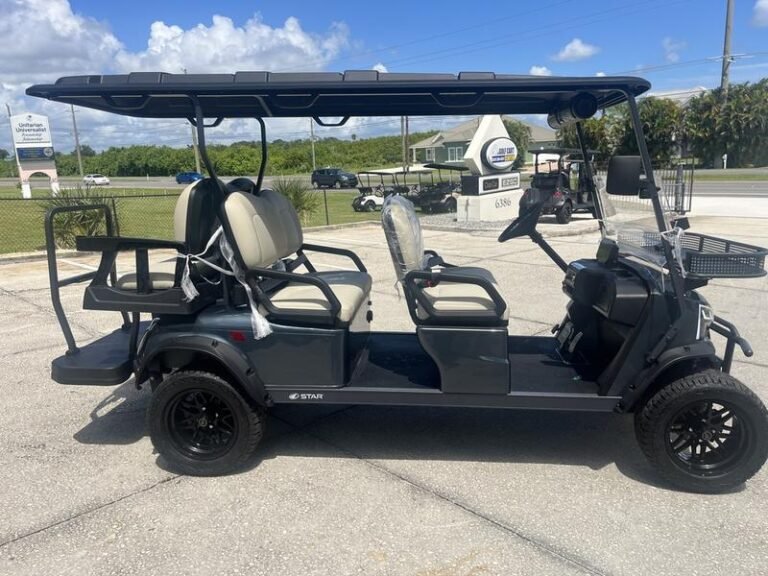
| STAR EV | Lithium passenger and lifted carts | Lithium models with modern standard features | Confirm configuration and local support |
| Cushman | Utility, shuttle and beverage vehicles | Broad work-focused lineup | Not the primary golfer-fleet brand |
| Evolution | Passenger and selected commercial EV roles | Lithium vehicles and modern equipment | Commercial duty and dealer support |
This is not a universal ranking. The best golf cart brands for golf courses change according to vehicle role, terrain, infrastructure and local support.
Among the best golf cart brands for golf courses, Club Car is a strong candidate when a facility wants one golf-focused ecosystem.
The current Club Car golf-operations range includes the Tempo primary fleet platform, Carryall turf utility vehicles, mobile-merchandising vehicles and Club Car Connect. Tempo is currently offered with flooded lead-acid and lithium choices.
Tempo may suit:
The broader catalog can simplify a proposal containing golfer carts and work vehicles.
Compare the exact battery, braking package, accessories, connected modules and service agreement. A fully equipped Tempo proposal should not be measured against a stripped competitor quotation.
Review current Club Car golf-operations vehicles and available Club Car golf carts from Golf Carts Nation.
E-Z-GO belongs in most comparisons of the best golf cart brands for golf courses where gas and lithium alternatives are required.
The current E-Z-GO fleet lineup includes RXV and Freedom RXV models with ELiTE lithium or 13.5-hp gas power. Its fleet offering also incorporates Pace Technology and factory-direct service positioning.
E-Z-GO may fit:
Compare the exact RXV or Freedom RXV package, charging or fueling requirements, service coverage and recurring technology costs.
Review the official E-Z-GO fleet lineup and available E-Z-GO fleet vehicles from Golf Carts Nation.
The best golf cart brands for golf courses are not always the same brands for every department.
Cushman’s current golf lineup includes Hauler utility vehicles, passenger shuttles and the Refresher Oasis food-and-beverage vehicle. Gas and ELiTE lithium options are available across several categories.
Cushman can support:
Its work vehicles should complement rather than replace the primary golfer fleet.
Review the official Cushman golf vehicle lineup and available Cushman utility and transport vehicles.
Lifted utility models require route, tire, weather and superintendent review before leaving approved service roads.
Evolution currently offers lithium passenger and commercial vehicle families, including Carrier passenger models and Turfman utility carts.
These vehicles may fit:
Do not assume a feature-rich personal-style model is automatically suitable for the primary course fleet. Verify tires, speed settings, bag equipment, commercial workload, authorized service and warranty registration.
Review the official Evolution vehicle lineup and available Evolution golf carts from Golf Carts Nation.
Technology ecosystems can materially change a brand decision.
Club Car markets Club Car Connect and E-Z-GO offers Pace Technology. These platforms differ in configuration, hardware and available functions, so they should not be treated as interchangeable.
Compare:
Warranty comparisons also require the actual documents for the proposed vehicle, battery and commercial application.
Review:
A responsive local supplier may be more valuable than a longer headline warranty with difficult administration.
Different facilities may select different best golf cart brands for golf courses.
| Facility | Strong selection priorities |
|---|---|
| Municipal course | Bid compliance, durability, service and lifecycle cost |
| Daily-fee course | Uptime, simple controls and rental contribution |
| Private club | Comfort, presentation and member experience |
| Resort | Mixed golfer, passenger, utility and hospitality vehicles |
| Hilly course | Loaded performance, braking and powertrain support |
| Multi-course operator | Standardization, regional service and contract control |
Use the following business-model guides for deeper planning:
The financial comparison of the best golf cart brands for golf courses should use equivalent configurations and the same ownership period.
Include:
Use the golf cart fleet total cost of ownership framework.
Useful measures include:
Cost per available cart = annual fleet cost ÷ average service-ready carts
Cost per riding round = applicable annual fleet cost ÷ riding rounds served
Do not accept projected savings as universal results. Apply each proposal to the course’s labor, energy, maintenance and utilization data.
Avoid:
A multi-brand fleet should be intentional. Every additional platform should solve a problem that justifies added parts, training and support complexity.
Golf Carts Nation can compare the best golf cart brands for golf courses through one role-based commercial review.
The comparison can include:
The objective is not to promote every manufacturer equally. It is to identify the strongest configuration for each department and compare complete proposals on the same basis.
Fleet orders get volume pricing (10% off from 4 carts, 15% off from 8) and coordinated delivery across the U.S. or export.
The best golf cart brands for golf courses are the brands that perform the required work and remain supportable throughout the planned ownership period.
Club Car and E-Z-GO should be compared for the primary golfer fleet. Cushman is a strong specialized brand for utility, passenger and beverage roles. Evolution may add value in selected hospitality and commercial-electric applications.
Define quantities, routes, powertrains, technology, service and warranty expectations before selecting the manufacturer. Then test completed vehicles and compare total ownership cost.
Request a multi-brand golf-course fleet comparison based on your course type, terrain, fleet quantity and required vehicle roles.
The best golf cart brands for golf courses commonly include Club Car and E-Z-GO for primary golfer fleets. Cushman is especially relevant for utility, passenger and beverage vehicles, while Evolution may suit selected hospitality and commercial-electric assignments. The correct choice depends on terrain, powertrain, local service, technology and ownership cost.
Neither brand is universally better. Club Car Tempo may appeal to courses seeking the broader Club Car golf-operations ecosystem and Connect technology. E-Z-GO RXV may suit buyers comparing gas and ELiTE lithium with Pace Technology. Test equivalent completed configurations and compare local support.
Cushman is better known for golf-course utility vehicles, passenger shuttles and food-and-beverage equipment. It can strengthen a mixed fleet, but a course should normally compare purpose-built two-passenger platforms from Club Car or E-Z-GO for its primary golfer transportation.
Not necessarily. One brand can simplify controls, parts and supplier management, but specialized duties may justify another platform. Use a controlled approved-brand list and document why each exception improves passenger capacity, cargo work, hospitality service or course operations.
No. Lithium is one part of the decision. Compare usable performance, chargers, electrical capacity, braking, vehicle weight, diagnostic support, battery warranty, local service and total ownership cost. Gas or lead-acid may remain appropriate for certain schedules and facilities.
Request the actual warranty for the proposed model, powertrain and commercial application. Compare coverage periods, exclusions, maintenance requirements, registration, labor, transportation, authorized repair locations and claim procedures. Also identify the local supplier responsible for administering the claim.
Yes. Golf Carts Nation can compare the best golf cart brands for golf courses by vehicle role, powertrain, accessories, technology, supplier support and delivery. Final availability, specifications, warranty terms and commercial pricing must be confirmed in the completed proposal.
Request a multi-brand golf-course fleet comparison based on your fleet quantity, course terrain, preferred powertrains, required vehicle roles and supplier-support expectations.
Keep reading
Club Car or E-Z-GO for your home? How the two Georgia brands compare on models, seating, lithium power, lifted options, live prices and warranty.
An overview of Denago EV and the lifted lithium Nomad XL, Rover XL and Rover XL6 carts we sell, with live prices and who each suits.
An overview of STAR EV, the South Carolina golf cart maker, and the Capella, Sirius, CP and J-Model carts we sell, with live prices.
Questions about this article?
Tell us what you need and where it's going. We'll reply with the best matches and a delivered price.