
Fleet & Business
Golf Cart Fleet Warranties: What Golf Courses Should Compare
A golf cart fleet warranty can reduce after-sales risk, but only when the golf course understands exactly which vehicles, batteries, components, labor…
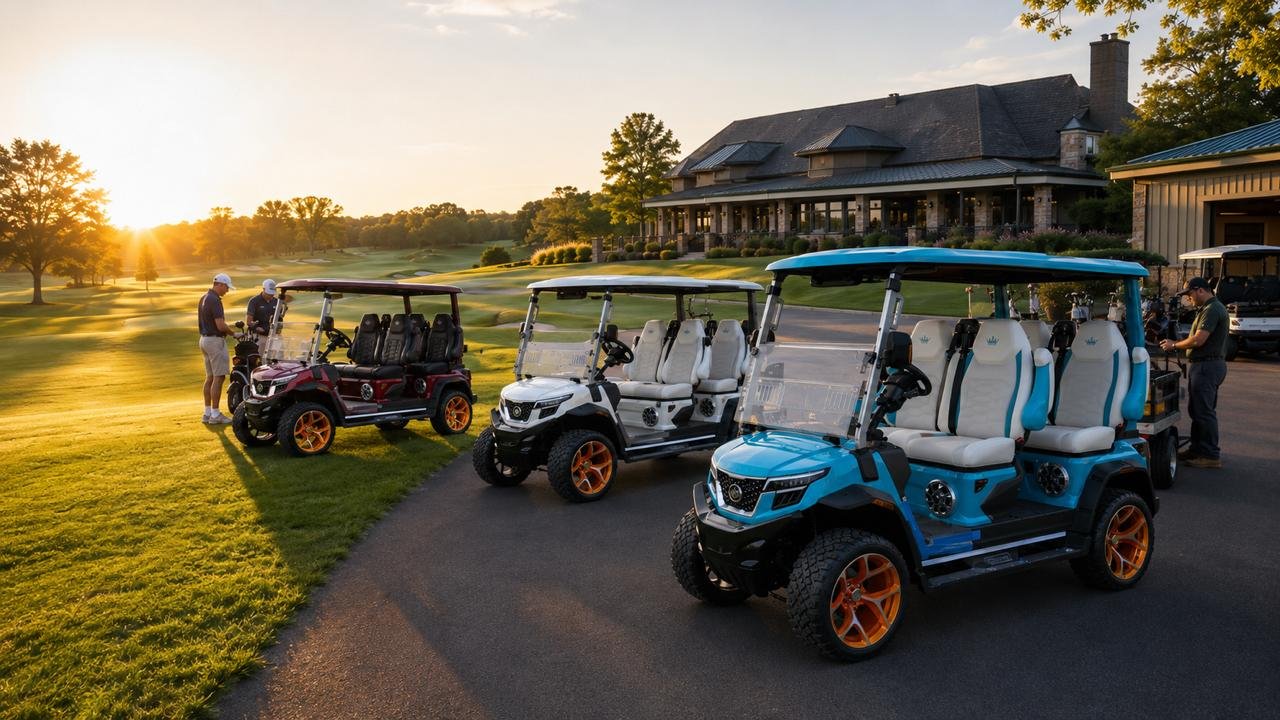
A golf course golf cart fleet affects far more than transportation. It influences tee-time capacity, golfer comfort, pace of play, course presentation, maintenance productivity, tournament logistics and the revenue a facility can earn from cart rentals and hospitality services.
That makes fleet selection a business decision involving the owner, general manager, Director of Golf, superintendent, equipment manager, finance team and procurement department. The right carts must fit the course’s terrain, operating schedule, customer expectations, maintenance resources and budget—not simply look attractive on delivery day.
This guide explains how to plan a complete fleet, compare gas and electric powertrains, separate golfer carts from utility and passenger vehicles, evaluate ownership costs and choose a supplier capable of handling a commercial order.
The right golf course golf cart fleet is usually a mixed group of vehicles rather than one identical model. Most facilities need two-passenger carts for golfers, utility vehicles for grounds crews, staff carts for marshals and managers, and passenger shuttles for tournaments, parking areas or resort guests.
Choose quantities from peak simultaneous demand, not annual rounds alone. Compare powertrains using terrain, charging capacity, daily utilization and maintenance staffing. Then evaluate warranty support, parts access, delivery coordination, financing and total ownership cost. A supplier should help define the fleet before quoting individual carts.
Golf remains a large, active U.S. market. The National Golf Foundation’s 2025 industry research reports approximately 29.1 million on-course golfers, more than 500 million annual rounds and roughly 16,000 courses at 14,000 facilities. High participation means operators must protect capacity, service quality and asset availability during peak periods.
Carts also create both opportunity and risk. The USGA’s golf-cart guidance notes that carts can improve accessibility and generate revenue, but concentrated traffic can harm turf and playing conditions. Fleet planning must therefore balance the golfer experience with agronomic requirements.
A poorly planned golf course golf cart fleet can produce several avoidable problems:
The objective is not to purchase the greatest number of carts. It is to build the correct mix of assets for the course’s revenue-producing and operational activities.
Begin by listing every job the vehicles must perform. Do not assume a standard two-passenger cart can serve every department.
Common roles include golfer transportation, marshaling, maintenance, food and beverage service, tournament logistics, guest shuttles and security support.
This role-based approach prevents under-specifying utility vehicles or paying for passenger features a work cart does not need.
Annual rounds do not reveal the number of carts required at the busiest moment. Estimate the maximum simultaneous riding groups, then account for carts being cleaned, charged, repaired or assigned to staff.
A golf course golf cart fleet also needs reserve capacity based on utilization, seasonality, vehicle age, events and service response.
Gas, lead-acid electric and lithium carts can all be suitable in the right environment.
Evaluate daily vehicle hours, terrain, charging opportunities, electrical capacity, refueling arrangements, noise expectations, maintenance staffing and the planned ownership period.
E-Z-GO currently offers its purpose-built RXV fleet platform in gas and ELiTE lithium configurations, demonstrating that manufacturers expect courses to select powertrains around their operating conditions rather than follow one universal answer. See the official E-Z-GO RXV fleet information.
Coordinate vehicle selection with the superintendent. Tire design, weight, drainage, soil, traffic and weather influence turf impact.
Lifted carts and aggressive tires may fit service roads or rough terrain, but they should not automatically be treated as fairway vehicles.
An electric fleet purchase is also an infrastructure decision. Review electrical service, charger placement, cable management and available charging time. A gas fleet requires safe fuel handling and refueling procedures.
Assess infrastructure before finalizing the golf course golf cart fleet, not after delivery.
The lowest quotation may not be the lowest-cost fleet.
Compare purchase or lease cost, energy, batteries, preventive maintenance, repairs, downtime, infrastructure, technology fees, delivery and resale value.
A higher initial price can be justified only when the additional value is relevant and defensible for that facility.
Confirm who handles warranty claims, how quickly parts can be obtained and whether the course mechanic needs specialized tools or training.
For a large golf course golf cart fleet, one service problem can affect many vehicles at once.
GPS screens, fleet tracking, geofencing, vehicle diagnostics, pace monitoring and golfer messaging can improve operations when they address a specific need.
Club Car’s connected-course platform includes features such as fleet monitoring, course protection and golfer communication, while E-Z-GO offers connected fleet options within its golf lineup. See Club Car Connect.
Evaluate technology by outcomes: course protection, vehicle location, pace management, golfer communication, maintenance alerts and revenue opportunities. Avoid features the facility will not actively implement.
A commercial supplier should do more than provide unit prices.
The best supplier relationship begins with understanding the operation, then translating that understanding into a practical golf course golf cart fleet.
A complete fleet commonly includes several vehicle classes.
| Vehicle role | Typical users | Important characteristics | Relevant Golf Carts Nation categories |
|---|---|---|---|
| Two-passenger golfer carts | Golfers and marshals | Course-friendly tires, dependable daily operation, simple controls and suitable range | E-Z-GO RXV 2 Freedom ELiTE Lithium and E-Z-GO RXV Gas |
| Premium two-passenger carts | Private-club members, managers and VIP golfers | Comfort, quiet operation and premium presentation | Club Car Onward 2 Passenger HP Lithium |
| Grounds-maintenance vehicles | Superintendent, irrigation and turf teams | Cargo bed, work-focused configuration and terrain suitability | Cushman Hauler 1200X Gas and Evolution Turfman Utility Carts |
| Passenger shuttles | Guests, staff and tournament participants | Passenger capacity, easy boarding and route suitability | Evolution Carrier Shuttle Carts |
Cushman’s official golf lineup separates utility vehicles, personnel transport and food-and-beverage vehicles, reinforcing the need to buy by job rather than treating every cart as interchangeable. See Cushman’s golf-course vehicle lineup.
Product recommendations should remain specific to the site. Good golf course golf cart fleet design assigns each vehicle to a defined job. A utility cart selected for maintenance must match payload, terrain and work requirements. A passenger shuttle must match route conditions and the people it will carry. Final specifications should always be confirmed before purchase.
Fleet sizing begins with operations data, not a generic carts-per-hole rule. The capacity of a golf course golf cart fleet should reflect the course’s busiest practical operating window.
Identify the busiest realistic operating periods:
Estimate how many groups will require carts simultaneously and whether single-rider policies or accessibility accommodations change the requirement.
Count vehicles assigned to:
These units should not be assumed available for golfer rental.
Reserve carts protect the tee sheet when a vehicle is charging, being cleaned or awaiting repair. The correct reserve percentage depends on the age and reliability of the fleet, local service response and seasonal intensity.
Confirm that the proposed golf course golf cart fleet fits the:
A fleet-sizing recommendation should therefore include both demand analysis and site capacity.
| Powertrain | May suit | Main advantages | Main considerations |
| Gas | High-use sites, hilly courses and facilities with limited electrical capacity | Fast refueling and familiar operation | Fuel, noise, engine maintenance and storage procedures |
| Lead-acid electric | Facilities with established charging and battery-care routines | Quiet operation and familiar fleet technology | Watering, charging discipline, battery weight and replacement planning |
| Lithium | Courses seeking quiet operation and reduced routine battery care | Consistent electric performance and simplified daily battery maintenance | Initial cost, charging design, battery warranty and supplier support |
The powertrain can determine how reliably a golf course golf cart fleet moves through a full operating day. Do not choose a powertrain from marketing language alone. Request written specifications, warranty terms and infrastructure requirements, then compare them against actual duty cycles.
The financial review for a golf course golf cart fleet should separate capital cost from operating cost.
Create a comparison sheet that includes:
Financing should be compared by total repayment, cash-flow impact, ownership rights and any conditions attached to the agreement—not only the monthly figure.
Delivery is equally important when deploying a golf course golf cart fleet in one coordinated order. A course should confirm whether vehicles arrive together, fully documented and on a schedule that avoids disrupting tournaments or peak season. Golf Carts Nation provides information about nationwide golf cart shipping for buyers planning multi-cart transportation.
Prioritize reliability, controllable ownership costs, straightforward maintenance and availability during peak public tee times. Procurement may require formal quotations, technical specifications and documented delivery terms.
The golf course golf cart fleet should reflect member expectations. Comfort, quiet operation, uniform appearance, cleanliness and connected features may carry more weight, but serviceability and operating cost remain essential.
Plan a mixed fleet. In addition to golfer carts, the property may require passenger shuttles, event vehicles, staff carts and utility vehicles supporting hospitality operations.
Standardization can simplify parts, training and purchasing. However, each location’s terrain, climate, volume and infrastructure should still be assessed before one specification is imposed across the portfolio.
Avoid these costly errors:
The strongest golf course golf cart fleet plan documents why each vehicle is being purchased and which operational result it should produce.
Golf Carts Nation can help golf courses source a coordinated mix of golfer carts, utility vehicles, passenger shuttles and specialized operational vehicles.
Instead of beginning with one model, begin with the course:
That information allows the commercial team to identify suitable categories, compare gas and lithium options and prepare a personalized fleet quotation. Buyers can contact Golf Carts Nation to discuss volume pricing, vehicle mix and coordinated delivery.
A well-designed golf course golf cart fleet supports the entire operation—from golfer transportation and pace management to turf maintenance, tournaments and guest service. The right purchase is not simply the cart with the longest feature list. It is the fleet that fits the property, protects operating capacity and remains supportable throughout its working life.
Start with the maximum number of riding groups expected simultaneously. Add vehicles assigned to staff and operations, then reserve capacity for cleaning, charging and repairs. The final number should also fit the cart barn and charging or fueling infrastructure.
Neither is universally better. Lithium may suit courses prioritizing quiet operation and reduced routine battery care. Gas may suit intensive use, steep terrain or limited electrical capacity. Compare actual duty cycles, infrastructure, maintenance resources, warranty terms and total ownership cost.
Usually not for demanding work. Grounds crews carrying tools, soil, irrigation parts or landscaping materials generally need purpose-built utility vehicles with suitable cargo capacity. Match the vehicle’s payload, tires and terrain capability to the task before use.
Only when the course determines that the tires, weight and configuration are appropriate. Lifted vehicles may serve perimeter, security or rough-terrain roles, but unrestricted fairway use can increase turf risk. The superintendent should approve the application and operating rules.
The quote should identify each model, quantity, powertrain and operational role so competing proposals can be compared fairly.
A capable commercial supplier can coordinate mixed orders, but buyers should verify brand availability, product suitability, documentation and delivery capability. Golf Carts Nation can prepare a personalized recommendation based on demand, maintenance work, passenger needs and the purchase schedule.
Request a personalized golf-course fleet quote to compare suitable vehicle categories, quantities, powertrains and delivery options.
Keep reading
A golf cart fleet warranty can reduce after-sales risk, but only when the golf course understands exactly which vehicles, batteries, components, labor…
A Club Car vs E-Z-GO golf course fleet decision usually comes down to far more than brand preference. Both manufacturers offer established…
Choosing the best golf cart brands for golf courses requires more than comparing logos, colors or one advertised specification. A course fleet…
Questions about this article?
Tell us what you need and where it's going. We'll reply with the best matches and a delivered price.